The other thing she refuses to do is decide. There is almost always a vote,
and she builds the machinery for it in front of them.
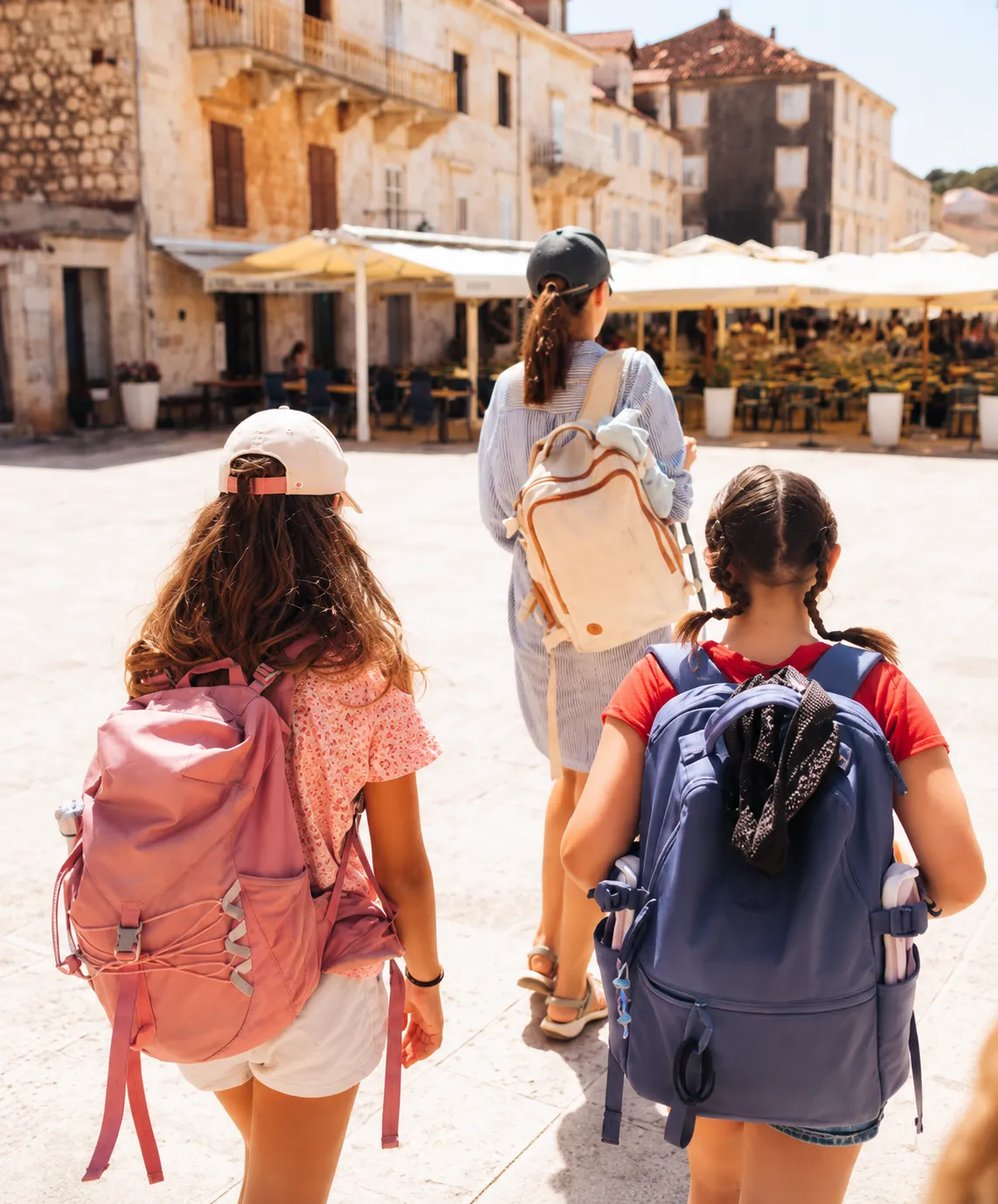
Sailing, with seven possible beaches ahead of them: before choosing, what are
the criteria for picking a beach? Water. Great — what else?
Shade. Shade matters, yes. They got to seven criteria, as adults
would, and then walked; anyone who saw a candidate called it out, the group
reassembled, ran the list, and voted.
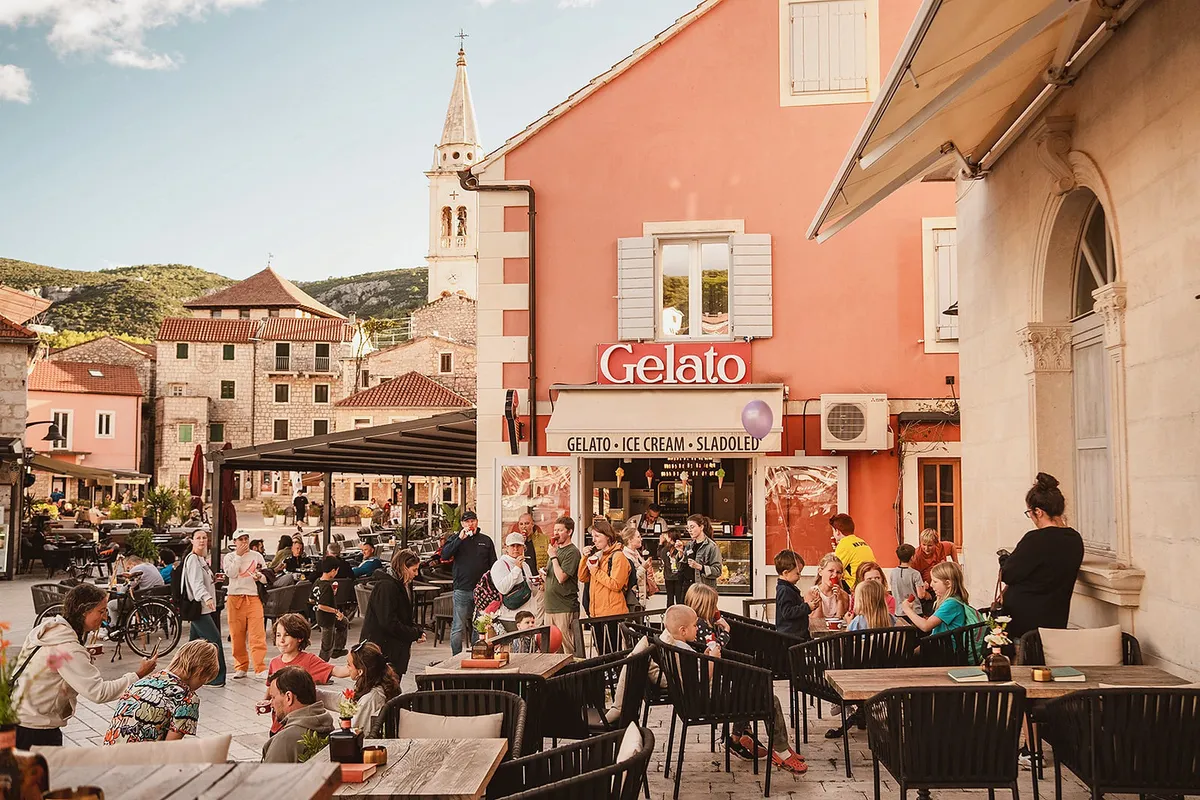
Later the same day came a genuine dilemma, and our sons were in the middle of
it. They could do the second sailing, in which case there would be no ice
cream; or they could have the ice cream, but she knew where the place was and
it was twenty minutes on foot each way. Was it worth it? Two wanted to go.
Three wanted to stay and swim. So she stopped the argument before it started
and defined the terms.
An argument, she told them, is something you say that might convince other
people to vote for your proposal. You have five minutes to make yours. Nobody
talks back during the five minutes; you put your case, and that is all.
We can go tomorrow instead, with our parents or with Jordan.
Good argument.
But it will not be the same tomorrow, because it will not be here.
Good argument. Then the vote, which the stay-and-swim side won three to two —
helped, she notes drily, by the fact that it had quietly become the boys
against the girls, and there were three boys.
Critical thinking, persuasion, the discipline of listening without
interrupting, and losing a vote you argued well. Over gelato.
ONE HOUR, AND ALL THE BOOKS
We put the skeptic’s question to her, because somebody has to: this is
charming for small children, but how do you know anyone is learning anything,
once the material becomes calculus and chemistry and the things a university
actually asks for?
Her answer is not about small children at all. It is about law school. She
spent a year studying in Münster, in Germany, and the contrast with Italy
stopped her cold. In Italy you read a great many books and you hold them in
your memory, and the examination is three questions drawn from five volumes:
what does that code say, what does this article say, can you recite it. You
end up knowing an enormous amount.
In Germany her professor — who was also a practising lawyer, which she notes
is uncommon at home — handed the students a real case from his own practice.
One hour. Use every book. Use the internet. No AI. Solve it.
“It’s not about having the books. Otherwise everyone
would be a lawyer and win cases.”
ARTEMISIA BUONERBA
Then the oral: one side takes the defence, one side takes the other, and they
hold the argument out loud as it would actually happen in a court. Elsewhere
in the same system, she says, you learn a topic, teach it to another student,
and that student is examined by the professor — and if what comes
back is what you should have taught, you understood it. Transforming a thing
instead of storing it. You cannot explain something to another person without
having genuinely understood it first.
None of which, she is careful to say, removes the need to learn the material.
That is the misconception she keeps meeting: that non-formal education means
no studying and no knowledge. The knowledge is all still there. What changes
is the route in, and how you check that it arrived. “It’s just about
methodology.”
She is not, incidentally, only doing this. She is finishing a master’s in
gender and women’s studies on an Erasmus Mundus programme — first year in
Bologna, second year in Granada, where she flies in September, graduating in
July. She pays for it by teaching German, A1 through B2, to adults, including
a set of students living in Switzerland; and she builds each course around
the person, because one of them wants grammatical structures and drills and
another wants to watch four minutes of a film and then talk about it. Friends
tell her she never stops. She agrees.
And then there is the magazine, which she started two years ago and which is
the reason we will probably be writing about her again.
It is called Svuota Tasche — empty your pockets. The name is the dish
by your front door, the one you drop your keys into when you walk in, along
with everything else that was in your pockets. The point of that dish is that
anything can go in it. She had noticed that the magazines she admired were
only one thing: only photography, or only poetry, or only short stories, or
only comics. She wanted the dish. Every art that can be printed, in one
object.
Issue one is Home, and the question they put out was deliberately
unanswerable. Is home where you live? Is your apartment your home? Is home
your country? Is home a person? Is home a feeling, a habit, something you
carry? They ran an open call, and she personally texted artists she had
admired for years. What came back was poetry, short stories, essays, drawings,
illustrations and comics, and it is all in Italian — printing means printing
in volume, and they were not sure an English edition would find its readers.
One Greek poem runs with the Greek and the Italian side by side, line for
line, so that a reader can go and look up the words. She thinks the original
should always be there next to the translation. The dream is a double
magazine: Italian from one cover, English from the other.
Seven people make it. The InDesign work — the actual setting of the type — is
unpaid and enormous, which is the only reason it is not quarterly yet.
The reason the magazine exists is a classroom. She was teaching in a high
school and she could see the talent in the room; what she could also see was
that the students carrying it did not believe they were good enough to send
it anywhere. She knew the feeling with some precision. In her own early years
of submitting short stories, the responses that came back were, in her word,
awful: you are not good enough; this is an elite magazine; you do not meet the
criteria. Nothing that would help a person get better. Everything required to
make them stop.
So Svuota Tasche has an editorial line, and it is one sentence: we
accept everything. What follows the acceptance is the work. A sixteen-year-old
sent them a piece with obvious potential and the structure and word choices of
a sixteen-year-old. It went back and forth six times.
This part is great. Here I think you could be more precise about what you
mean. This colour is a bit shady — you could saturate it.
The girl returned a clean version and Artemisia told her it was perfect, and
that they could still make it better.
Most magazines do not have six rounds in them, and she is not judging them
for it. But her team is a teacher and a social worker and people like them,
and they decided mentoring was going to be a stated value rather than a
favour.
“If you’re eighteen and you see yourself printed in a
magazine, that’s everything.”
ARTEMISIA BUONERBA
What she wants next is to get into schools with it: creative writing
workshops for children and teenagers built around a single emotion — take
one, describe it — because in her experience teenagers have a hard time
getting those out, and an even harder time finding anyone who will listen to
them properly.
IF YOU HAVE SOMETHING IN A DRAWER
-
The magazine is Svuota Tasche —
“empty your pockets.” Issue one is Home. Everything
printable is welcome: poetry, short stories, essays, photographs,
drawings, comics.
-
They accept everything, and then they edit it with you. Expect notes,
and expect to be asked for another pass. That is the point of the
place.
-
Submissions and copies both go through Instagram. The pinned post at
@svuotatasche_rivista
explains exactly how; a message or an email is enough, and they will
post a copy to your house.
-
It is published in Italian. Translations run alongside the original
where there is one, and an English edition is something she wants
rather than something that exists.
-
If you teach, she is looking for too. The creative writing workshops
are the part she most wants to build, and she is actively trying to
place them in schools.
We asked what she notices between a group’s first day and its last, and her
first answer was not about character. It was about the clock. Nobody should
assume a small child can absorb a seven-hour afternoon programme overnight.
Her first session was four- and six-year-olds, and by six in the evening they
were finished — the adults too, she says, but the children especially.
Adapting that fast is genuinely hard, and it is worth saying out loud to a
parent who is about to book.
Then the change: by the end of the second week they are braver. Most of the
children who come here arrive from carefully protected lives, and it shows in
the first days — I do not want to touch that, I do not want my hands dirty, I
do not want my dress dirty. Then they watch it be fun, and they go, and they
are children.
There was one girl she thinks about. Perfectly clear from the start: I am not
touching anything, I do not care what the rosemary smells like, I am not
touching it. Fine, Artemisia said; nobody is making you. Ten days later the
same girl was in the middle of everything with her hands out —
give me all the plants, I want to touch everything, I want to do the oil,
I want to make the bag, I want to dye it — while they tipped essential
oils into a pot to colour the bags they had made. She turned to Jordan and
said: remember that this is the girl who a week ago would not touch a thing.
And after the courage, she says, comes the other thing, which is respect for
the place. Leaving it better than you found it.
Her own favourite spot is five minutes from the school and it depends on the
hour. In the morning there is shade on a swimming platform nearby; she gets
into the water, climbs out, and does her stretching and her yoga there with
the breeze coming off the sea.
Asked what actually makes the school work, she does not say the sea, though
she thinks the sea here is the most beautiful she has seen and she is Italian,
which she considers a real concession. She says the community — the staff,
the children and the parents together, the certainty that whatever happens
during the day you will see these people at night. In a city, she points out,
having a drink with your colleagues requires organising months in advance.
Here they finish, they walk, they have one drink, they ask each other how it
went, they talk about work for a while.
“And then her, how are you, as a person? Really interested in
the person. I think that’s what makes it special.”
IN THIS CONVERSATION
| 00:00 |
The friend in Greece who sent her the listing — and the job
that was already filled
|
| 02:31 |
One cafe, one boat, ten strangers, and the excursion guide’s
role that came free
|
| 04:42 |
Shipwrecked on rabbit island: food, water, and eight different
plants
|
| 07:09 |
“You cannot get lost in the classroom”
|
| 09:18 |
Close your eyes — what is that? And never giving a child the
solution
|
| 11:53 |
Seven criteria for choosing a beach, and the gelato vote
|
| 14:15 |
The skeptic’s question: what about calculus, chemistry,
university?
|
| 16:34 |
Italy against Germany — reciting the article by heart, or one
hour and every book
|
| 18:49 |
Teach it to someone else — “it’s just about methodology”
|
| 21:07 |
The magazine: Svuota Tasche, and the dish by the front door
|
| 23:31 |
The Greek poem beside the Italian — and the rejections she got
at the start
|
| 25:50 |
“We accept everything”: the sixteen-year-old and the six
rounds of edits
|
| 28:57 |
Her spot in the morning, and what actually makes the school
work
|
| 30:39 |
Why the island makes everyone slow down
|
| 32:28 |
The seven-hour afternoon, and the girl who would not touch the
rosemary
|